Admin
01/03/2026
5
Ultimate Guide to EV Charging in Australia — Home vs Public Chargers
EV Charging in Australia: An Overview
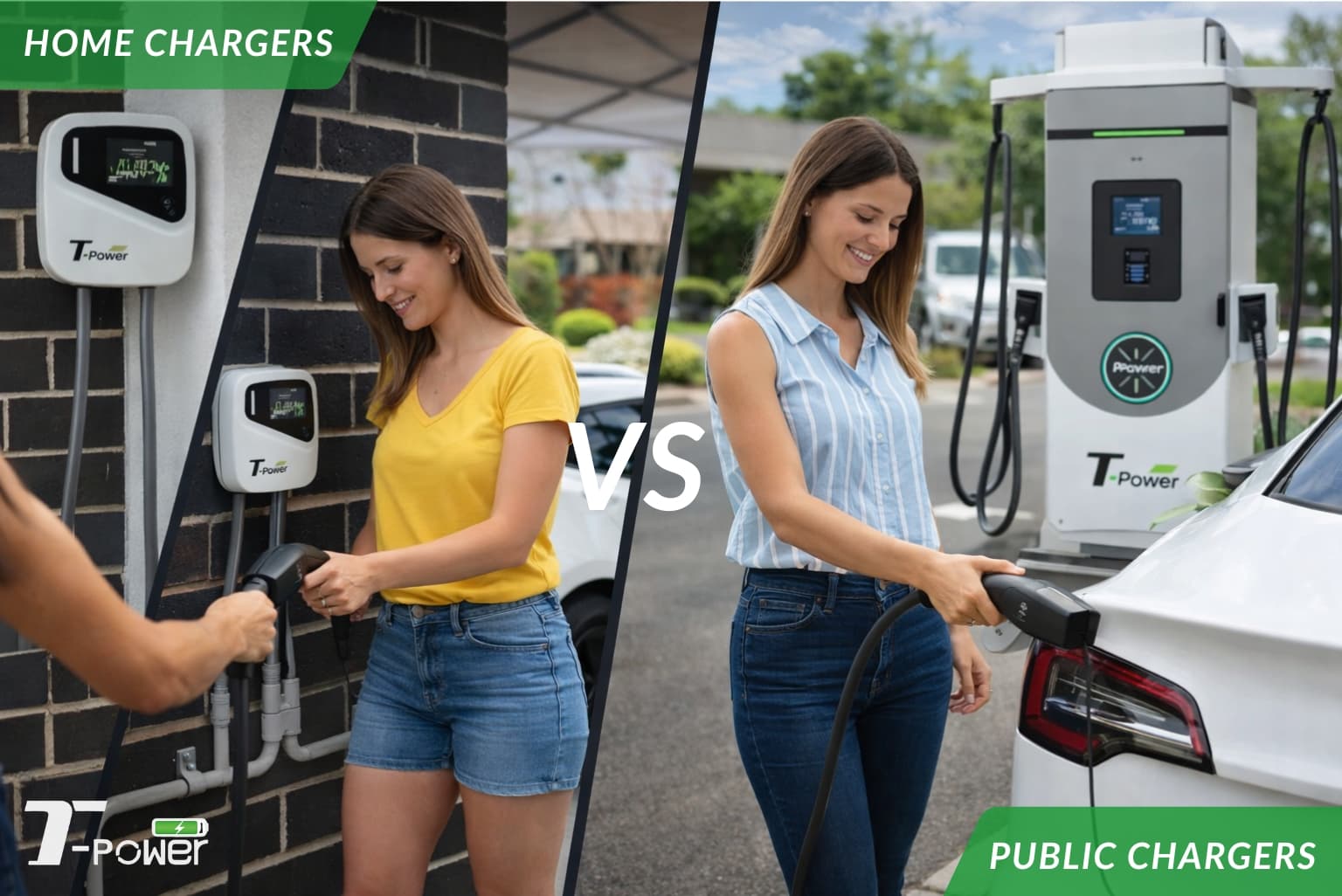
EV charging in Australia generally falls into two main categories: charging at home using AC power and charging in public using AC or DC fast chargers. Home EV charging usually involves a dedicated charger installed in a garage or driveway, while public EV charging stations are located at shopping centres, highways, workplaces, and commercial areas. Both options play an important role in Australia’s growing EV ecosystem, but they are designed for different use cases.
How EV Charging Works: AC vs DC Explained
EV chargers operate using either alternating current (AC) or direct current (DC). AC charging is commonly used in homes and workplaces and delivers power at a steady rate suitable for overnight charging. DC fast charging converts power before it reaches the vehicle, allowing much higher charging speeds. In Australia, AC charging is ideal for daily use, while DC fast charging is primarily intended for long-distance travel or quick top-ups when time is limited.
Home EV Charging in Australia: Daily Convenience and Control
Home EV charging in Australia is the most practical option for everyday driving. Charging at home allows EV owners to plug in overnight and start each day with a full battery, without depending on public infrastructure. Most home EV chargers can fully charge a vehicle within six to eight hours, aligning naturally with daily routines. This level of convenience is one of the main reasons home EV charging is preferred by Australian EV owners.
Cost of Charging an EV at Home in Australia
Charging an EV at home is generally more cost-effective than using public charging stations. Australian household electricity rates are lower than public charging tariffs, particularly during off-peak hours. When combined with solar energy, home EV charging costs can be reduced even further. Over time, these savings significantly lower the total cost of EV ownership, making home charging a financially smart decision for regular drivers.
Public EV Charging Stations in Australia: Flexibility on the Road
Public EV charging stations provide essential support for drivers who travel long distances or do not have access to home charging. These stations range from slower AC chargers to high-powered DC fast chargers capable of delivering substantial range in a short time. Public charging is especially valuable on highways and in regional areas, where access to fast charging reduces range anxiety and improves travel confidence.
Cost of Public EV Charging in Australia
Public EV charging in Australia typically costs more than charging at home, particularly when using DC fast chargers. Pricing varies depending on the provider, location, and charging speed. While public charging offers speed and flexibility, frequent reliance on it can increase overall charging expenses. For this reason, many EV owners view public charging as a complementary solution rather than a primary one.
Home vs Public EV Charging: Which Is Better?
When comparing home EV charging vs public charging, the key differences come down to cost, convenience, speed, and availability. Home charging offers predictable access, lower long-term costs, and gentler charging for battery health. Public charging provides speed and accessibility when travelling or when home charging is not available. For most Australian EV owners, home charging forms the foundation of daily use, while public charging fills the gaps.
Security and Safety Considerations for EV Charging
Security is an increasingly important factor for EV owners. Home EV charging provides a controlled environment with limited access and modern safety protections such as overcurrent and temperature monitoring. Public charging stations are generally safe but are shared by many users and exposed to higher physical wear. For EV owners who prioritise peace of mind, home charging offers a more secure and predictable experience.
Solar Power and Home EV Charging in Australia
Australia’s abundant sunlight makes solar-powered EV charging a major advantage for homeowners. Charging an EV using solar energy can dramatically reduce electricity costs while lowering environmental impact. This combination allows EV owners to maximise the value of their solar investment and future-proof their charging setup against rising energy prices. With T-Power’s smart, solar-compatible charging solutions, homeowners can seamlessly integrate clean energy with reliable, future-ready EV charging technology.
EV Charging for Apartments, Businesses, and Fleets
Not all EV owners have access to private home charging. Apartment residents often rely on shared or public charging options, while businesses and fleet operators benefit from installing on-site chargers to manage costs and vehicle availability. As EV adoption grows, more residential and commercial developments across Australia are integrating EV charging infrastructure into their planning.
The Future of EV Charging in Australia
The future of EV charging in Australia is moving toward smarter, faster, and more connected solutions. Smart chargers, real-time monitoring, and renewable energy integration are shaping a more efficient charging ecosystem. These advancements will help EV owners charge more intelligently while supporting Australia’s broader sustainability goals.
Final Thoughts: Charging Smarter in Australia
EV charging is about more than simply powering a vehicle. It is about convenience, cost control, security, and long-term confidence. By understanding the difference between home and public EV charging in Australia, EV owners can create a charging strategy that suits their lifestyle today and adapts to the future. For most drivers, home EV charging offers the strongest foundation, with public charging providing essential flexibility when it is needed most.